


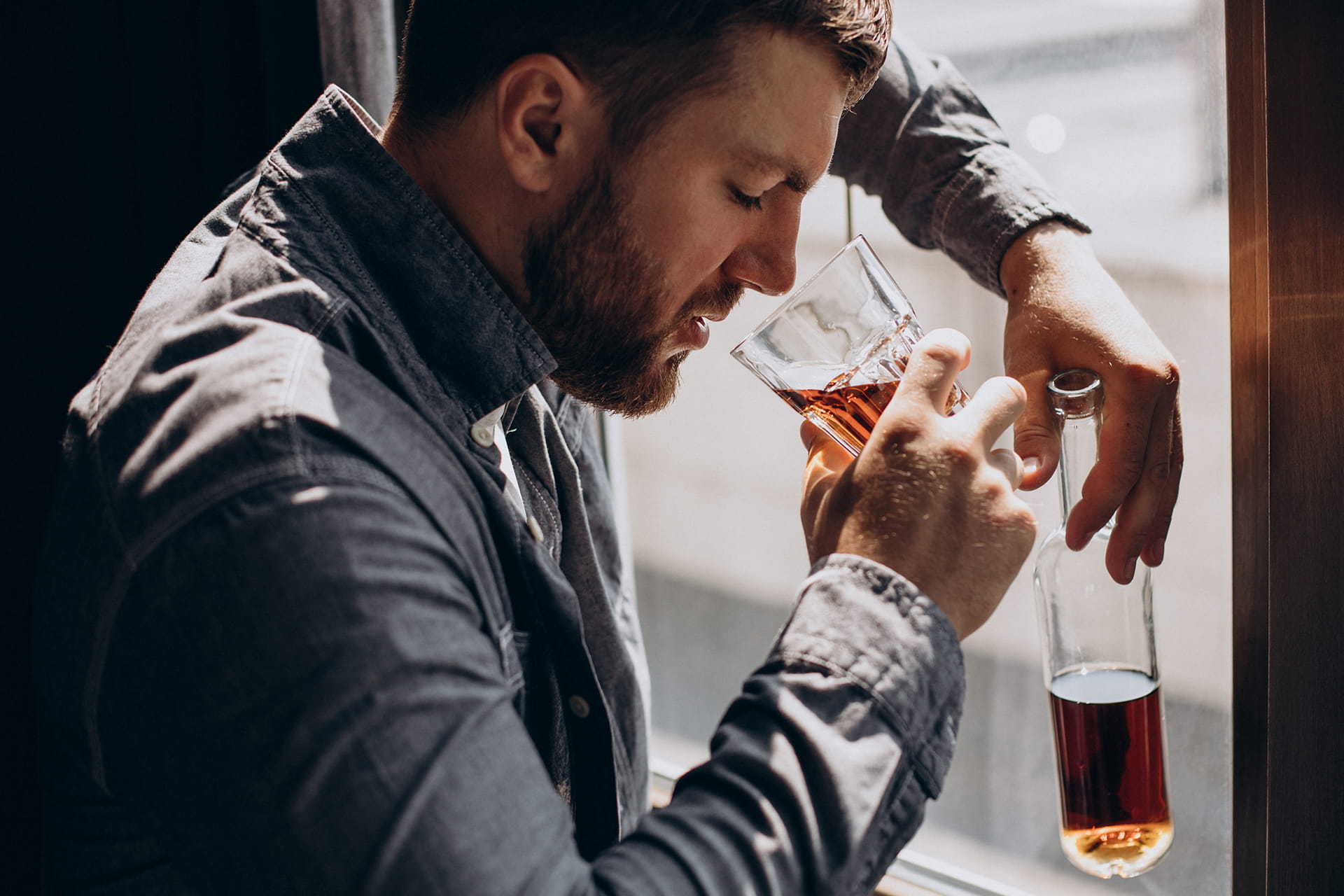
The American Alcohol Problem

Alcohol occupies a strange place in American life. It’s legal, socially celebrated, woven into nearly every kind of gathering and it’s also one of the leading preventable causes of death in the country. That contradiction sits at the heart of what might be called the American alcohol problem: a substance so normalized that its genuine harms are easy to overlook, both at the national scale and in individual lives.
Looking honestly at the numbers, and at the culture behind them, reveals a picture that’s more serious than most people realize.
Table of Contents:
The Numbers Are Staggering
The scale is hard to overstate. According to 2024 federal survey data, roughly 27.9 million Americans aged 12 and older, about 9.7% of that population, met the clinical criteria for alcohol use disorder in the past year. That’s more people than live in the entire state of Texas. Among adults specifically, that’s roughly one in ten.
The consequences are just as sobering. The CDC attributes around 178,000 deaths each year to excessive alcohol use, a figure that rose nearly 29% over the span from 2016 to 2021. That makes alcohol one of the leading preventable causes of death in the United States, ahead of many things that receive far more public attention. And the economic cost runs to hundreds of billions of dollars annually when healthcare, lost productivity, and related harms are added up.
The One Substance We Celebrate
What makes alcohol unique isn’t just how widely it’s used, around 62% of Americans reported drinking in the past year, but how thoroughly it’s woven into the culture. It’s the one drug we actively celebrate. Weddings, holidays, promotions, funerals, sporting events, casual weeknights: alcohol is the default accompaniment to nearly every significant moment. This cultural saturation is part of why social pressure normalizes heavy drinking so effectively, the drinking isn’t just permitted, it’s expected, encouraged, and tied to belonging.
No other substance with comparable health risks enjoys this kind of social endorsement. That endorsement isn’t neutral. It shapes how much people drink, how they think about their drinking, and crucially, whether they recognize a problem when one develops.
Why Normalization Hides the Problem
When a behavior is this normalized, it becomes remarkably hard to see clearly. If everyone around you drinks heavily, your own heavy drinking looks ordinary. The cultural baseline for “normal” drinking sits high enough that a genuine problem can hide comfortably beneath it, indistinguishable from the crowd. Someone can drink at a level that’s quietly harming their health and still be drinking no more than their friends, their coworkers, their family.
This is the trap at the center of the American alcohol problem. The very normalization that makes alcohol socially frictionless also removes the signals that might otherwise prompt someone to reconsider. There’s no obvious line being crossed when the whole culture is drinking alongside you.
The Treatment Gap
Perhaps the most troubling statistic isn’t about how many people have a problem, but about how few get help. Of the nearly 28 million Americans with alcohol use disorder, only around 2.1 million, roughly 7.6%, received any form of treatment in the past year. That means more than nine in ten people with a diagnosable alcohol problem get no help at all.
The reasons are varied: stigma, cost, lack of access, and the simple fact that many people don’t recognize their drinking as a problem in the first place. But the size of the gap points to something structural. This isn’t a small number of people slipping through the cracks, it’s the overwhelming majority of affected people never entering treatment at all.
The Shifting Picture
There are signs the culture may be changing. Gallup polling in 2025 found that just 54% of American adults reported drinking, the lowest figure since the organization began tracking it in 1939, and a notable drop from 62% just two years earlier. Younger generations in particular are drinking less than their predecessors, and the sober-curious movement has made not drinking more socially acceptable than it used to be.
But it’s important not to overstate this. Fewer people drinking overall hasn’t yet translated into a proportionate drop in the most serious harms. Alcohol use disorder rates and alcohol-related deaths remain high even as overall consumption softens. The people who drink heavily are still drinking heavily, and the problem among them hasn’t resolved just because the broader culture is shifting at the margins.
Recognizing It in Your Own Life
National statistics are one thing; recognizing the problem in your own life is another, and the normalization that hides it at scale operates just as powerfully up close. This is especially true for people whose lives still look successful from the outside, the signs of high-functioning addiction are easy to miss precisely because so much of the surrounding culture drinks the same way. The useful question isn’t whether your drinking looks normal compared to those around you, but whether it’s affecting your health, your relationships, or your sense of control in ways that concern you.
That’s a harder question to sit with than a comparison to the people at the next table, but it’s the one that actually matters. The cultural baseline is not a reliable measure of what’s healthy for any individual person.
A Problem With a Path Forward
The American alcohol problem is real and large, but it’s not hopeless, either at the national level or the personal one. Alcohol use disorder is treatable, and the treatment gap exists largely because of barriers that can be lowered, not because the problem itself is intractable. For individuals, recognizing that drinking has become a problem is the hardest and most important step, and options exist for what comes next. For many people, in-home alcohol detox offers a way to begin safely and privately, without the barriers that keep so many people out of treatment.
The numbers describe a country with a serious, under-addressed relationship with alcohol. But statistics are made of individual people, and any one of those people can change their own story. At Elite Home Detox, the focus is on making that possible, helping people step out of a cultural current that pulls so strongly toward drinking, and toward something healthier on the other side.